

Why Young Men Are Getting Hit With High Blood Pressure Earlier Than Ever
High blood pressure used to be considered an older man's problem. New data says that thinking is dangerously out of date.
If you're a man in your 30s or 40s and you haven't had your blood pressure checked lately, this is your wake-up call. Hypertension — long thought of as something that crept up on men in their 60s — is now being diagnosed at younger ages, and men are bearing a disproportionate share of that burden.
The Numbers Tell a Troubling Story
According to the Centers for Disease Control and Prevention (CDC), nearly half of all American adults have high blood pressure, defined as a reading of 130/80 mmHg or higher under current American Heart Association guidelines updated in 2017. What has shifted in recent years is who is getting diagnosed — and when.
Research published in the Journal of the American College of Cardiology has shown that younger men — those under 45 — have significantly higher rates of hypertension than younger women of the same age. In fact, the American Heart Association notes that men are more likely than women to develop high blood pressure before age 55. That gap is real, and it matters.
Why Men's Blood Pressure Rises Earlier
Biology plays a role. Estrogen is thought to offer women some degree of cardiovascular protection during their reproductive years. Men don't have that buffer, which may partly explain why blood pressure tends to climb earlier in men than in women.
But lifestyle factors are driving much of the trend. High sodium diets, physical inactivity, excess weight, chronic stress, heavy alcohol use, and poor sleep are all established risk factors for hypertension — and research consistently shows that men are less likely than women to have a regular primary care relationship, which means these risk factors often go unaddressed longer.
The rise of obesity in younger adults is particularly significant. Excess body weight — especially around the midsection — is strongly associated with higher blood pressure. As obesity rates have climbed in men in their 30s and 40s, hypertension has followed.
The Danger of Feeling Fine
Here's the part that catches many men off guard: high blood pressure usually has no symptoms. It's been called the "silent killer" for a reason. You can feel perfectly healthy while your arteries are under sustained pressure that is quietly damaging your heart, kidneys, and brain.
Left uncontrolled over years, hypertension significantly raises the risk of heart attack, stroke, heart failure, and kidney disease. Catching it early — and doing something about it — dramatically changes that trajectory. That's why routine blood pressure screening matters even when you feel fine.
What You Can Do Starting Today
The good news is that lifestyle changes can have a meaningful impact on blood pressure, and the research supporting them is solid.
- Cut back on sodium. The American Heart Association recommends no more than 2,300 mg of sodium per day, with an ideal target of 1,500 mg for most adults with high blood pressure. Processed and restaurant foods are the biggest sources.
- Move more. Regular aerobic exercise — even brisk walking for 30 minutes most days — is linked to measurable reductions in blood pressure.
- Watch your weight. Even modest weight loss in people who are overweight can lower blood pressure meaningfully.
- Limit alcohol. Drinking more than two drinks per day is associated with higher blood pressure in men.
- Manage stress. Chronic stress activates hormones that raise blood pressure over time. Sleep, exercise, and mindfulness practices all support stress reduction.
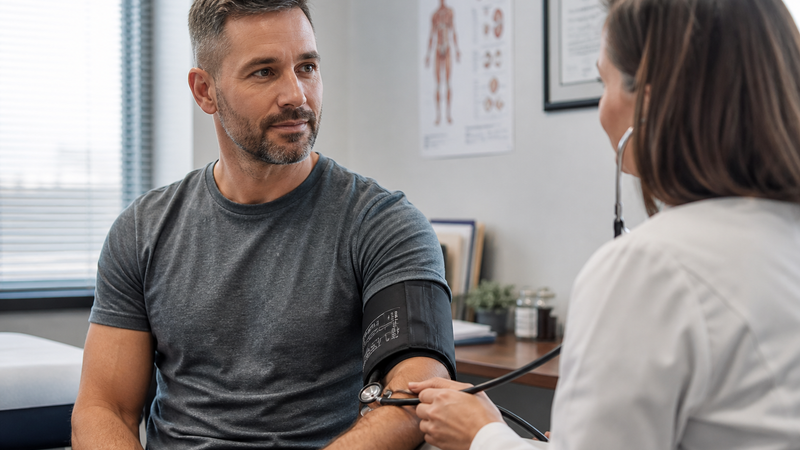
- Get checked. Blood pressure monitors are available at most pharmacies and are affordable for home use. But a reading from your doctor gives you context and a baseline.
If your doctor recommends medication, that conversation is worth having seriously. Antihypertensive drugs are among the most well-studied medications in existence, and for many people, they are part of a comprehensive plan alongside lifestyle changes. Never stop or start a blood pressure medication without talking to your doctor first.
Men Are Less Likely to Know They Have It
One of the most concerning aspects of hypertension in younger men is the awareness gap. Studies have found that men with high blood pressure are less likely than women to know they have it, less likely to be treated, and less likely to have it under control. Part of that comes down to doctor visit rates — men, on average, see a physician less often than women.
If you haven't had a physical in the last year or two, that's worth fixing. Blood pressure screening is quick, painless, and could give you information that genuinely changes the course of your health.
The Bottom Line
High blood pressure isn't just an older man's problem anymore. Men in their 30s and 40s are being diagnosed at higher rates than ever, often without any warning signs. The combination of biology, lifestyle factors, and lower rates of medical care creates a perfect storm — but it's one you can do something about. Get your blood pressure checked, take the lifestyle basics seriously, and talk to your doctor if your numbers are trending in the wrong direction. Catching this early is one of the most powerful things you can do for your long-term health.
