

Which Supplements Men Over 40 Actually Need — and Which to Skip
The supplement aisle can feel overwhelming — here's what the science actually says about what men need after 40.
Walk into any pharmacy and the men's health supplement section looks like a college chemistry lab. Hundreds of bottles, each promising to boost energy, sharpen your mind, build muscle, or protect your heart. But most men over 40 are either taking too much of the wrong things or skipping the few that genuinely matter. Here's how to cut through the noise.
Why Men's Nutritional Needs Shift After 40
After 40, several things change at once. Testosterone begins a slow decline. Muscle mass starts to drop. The body becomes less efficient at absorbing certain nutrients from food. And the risk of conditions like heart disease, type 2 diabetes, and prostate issues climbs.
None of this is cause for alarm — it's biology. But it does mean that the nutritional gaps most likely to affect how you feel and how long you stay healthy are different at 45 than they were at 25.
The important caveat: supplements fill gaps. They are not a substitute for a healthy diet, regular movement, and good sleep. No pill makes up for poor habits.
The Short List: Supplements With Solid Evidence for Men Over 40
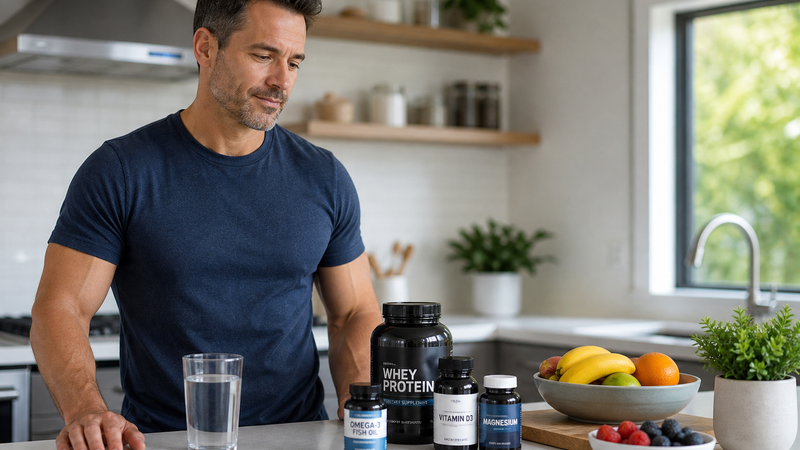
Vitamin D. This is one of the most common deficiencies in American adults, and men are not immune. The National Institutes of Health Office of Dietary Supplements notes that vitamin D supports bone health, immune function, and muscle function — all of particular relevance as men age. Many people, especially those who work indoors or live in northern climates, don't get enough from sunlight alone. A blood test from your doctor can tell you whether you're deficient before you start supplementing.
Magnesium. Research suggests a large portion of Americans don't meet their daily magnesium needs through diet alone. Magnesium plays a role in muscle and nerve function, blood sugar regulation, and blood pressure. Some studies have linked adequate magnesium intake to better sleep quality — something many men over 40 would welcome. Food sources include leafy greens, nuts, seeds, and whole grains, but a supplement may help close the gap if your diet falls short.
Omega-3 Fatty Acids. The evidence for omega-3s — found in fish oil — on heart health has had its ups and downs in the research literature. The American Heart Association still recommends eating fatty fish at least twice a week for heart health benefits. For men who don't eat much fish, a fish oil supplement is a reasonable option to discuss with a doctor, particularly those with elevated triglycerides. The VITAL trial, a large study published in the New England Journal of Medicine, found some cardiovascular benefits in certain groups, though the overall picture remains nuanced.
Creatine. This one surprises people. Creatine is best known as a gym supplement, but research published in journals including the Journal of the International Society of Sports Nutrition suggests it may support muscle strength and mass in older adults — and there is growing interest in its potential cognitive benefits. It is one of the most studied supplements in existence and has a strong safety record at standard doses. Still, talk to your doctor before starting, especially if you have kidney concerns.
Worth Watching: Zinc and B12
Zinc supports immune function and plays a role in testosterone metabolism. Older men and those with diets low in meat and shellfish may be more likely to fall short. That said, too much zinc can actually interfere with copper absorption, so more is not better here.
Vitamin B12 is absorbed less efficiently as we age, and certain medications — including the widely prescribed diabetes drug metformin — can further reduce B12 levels, according to research and guidance from the NIH. Men over 50, vegetarians, and anyone on long-term metformin should ask their doctor about their B12 status.
The Ones That Are Likely a Waste of Money
Testosterone boosters. The shelves are full of products claiming to naturally raise testosterone. Most rely on ingredients like tribulus terrestris or fenugreek. The clinical evidence for meaningful testosterone increases in healthy men is thin at best. If you genuinely suspect low testosterone, that's a conversation to have with your doctor — not a supplement decision.
Proprietary "energy blends." Products listing a long string of exotic herbs and amino acids under a "proprietary blend" label often give you no way to know how much of each ingredient you're actually getting. The research behind many of these combinations is limited or nonexistent.
High-dose antioxidant supplements. More antioxidants are not always better. Some large clinical trials have found that high-dose antioxidant supplements like beta-carotene actually increased risk of harm in certain populations, such as smokers, according to research reviewed by the NIH. Getting antioxidants from colorful fruits and vegetables remains the safer and better-studied approach.
Saw palmetto for prostate health. Despite its popularity, a major clinical trial funded by the National Institutes of Health — the STEP study — found that saw palmetto was no more effective than a placebo for reducing symptoms of an enlarged prostate. It may not be harmful, but the evidence for benefit is not there.
Before You Buy Anything, Do This
Get a basic blood panel from your doctor. Knowing your actual vitamin D, B12, and magnesium levels takes the guesswork out of the equation entirely. Supplementing nutrients you don't actually need is, at best, expensive and, at worst, counterproductive.
Also look for third-party tested products. The supplement industry is not as tightly regulated as pharmaceuticals. Labels from organizations like USP, NSF International, or ConsumerLab on a supplement bottle mean an independent group has verified that what's on the label is actually in the bottle.
The Bottom Line
Most men over 40 don't need a cabinet full of supplements — they need a short, targeted list based on real data and their own bloodwork. Vitamin D, magnesium, omega-3s, and possibly creatine or B12 have the most credible evidence behind them for this age group. Skip the flashy testosterone boosters and mystery blends. Start with a conversation with your doctor, get your levels checked, and build from there.
