

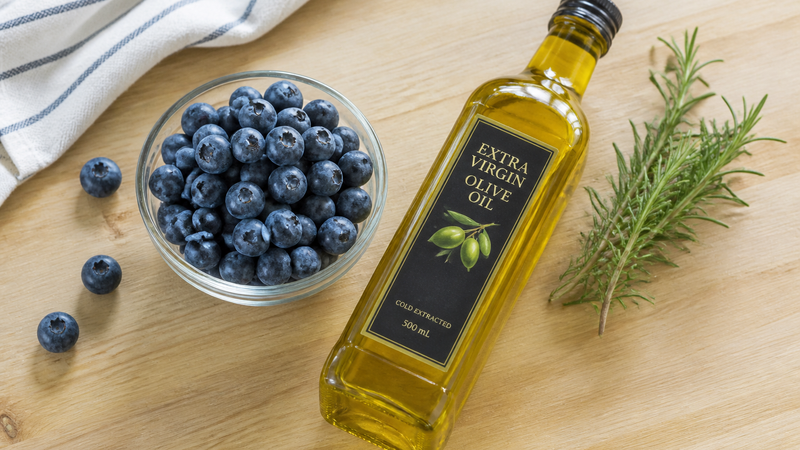
Two Foods Science Keeps Coming Back to for a Sharper Brain
Of all the foods researchers have studied for brain protection, two keep rising to the top — and they're probably already in your kitchen.
You've heard plenty of claims about so-called brain foods. Most don't hold up when you look closely at the evidence. But when researchers study what people actually eat over years and decades, two foods keep standing out: extra-virgin olive oil and blueberries. Here's what the science really says — and what it doesn't.
Why These Two? A Quick Look at the Evidence
Brain health research is hard to do. You can't randomly assign people to eat a certain diet for 30 years and then measure their cognition. So most of what we know comes from observational studies — large groups of people tracked over time — and some shorter clinical trials. That means the word "linked" matters. These foods are associated with better brain outcomes. That's meaningful, but it's not a guarantee.
What sets olive oil and blueberries apart is the sheer volume of research behind them and the consistency of the findings across different populations and study types.
Extra-Virgin Olive Oil: More Than Just a Healthy Fat
Olive oil has been studied extensively as part of the Mediterranean diet, one of the most researched dietary patterns for brain health. The landmark PREDIMED study — a large randomized trial involving more than 7,000 adults at high cardiovascular risk — found that a Mediterranean diet supplemented with extra-virgin olive oil was associated with better cognitive function compared to a low-fat control diet.
Extra-virgin olive oil contains a compound called oleocanthal, which research published in journals including the Annals of Neurology has suggested may help the brain clear amyloid proteins — the same proteins that accumulate in Alzheimer's disease. These are mostly laboratory and animal studies, so they don't prove an effect in humans, but they help explain why researchers are paying close attention.
A study from Temple University published in 2017 found that mice fed extra-virgin olive oil showed better memory and learning and fewer signs of brain inflammation than control mice. Again, this is animal research — a starting point, not a conclusion — but it added to the growing scientific interest.
The key word throughout is extra-virgin. Refined olive oils go through processing that removes many of the beneficial compounds. Look for "extra-virgin" on the label and use it regularly in cooking, salad dressings, and as a finishing drizzle.
Blueberries: Small Fruit, Serious Research
Blueberries are rich in a group of plant compounds called flavonoids, particularly a subtype called anthocyanins, which give them their deep blue-purple color. These compounds have antioxidant and anti-inflammatory properties that researchers believe may help protect brain cells from damage over time.
The Rush University Memory and Aging Project, a long-running observational study following older adults in Chicago, found that higher consumption of flavonoid-rich foods — including berries — was associated with slower cognitive decline. Participants who ate berries more frequently showed rates of cognitive aging that appeared years younger than those who rarely ate them.
Several smaller clinical trials have also looked at blueberry supplementation specifically. A 2010 study published in the Journal of Agricultural and Food Chemistry found that older adults with early memory decline who drank wild blueberry juice daily for 12 weeks showed improvements in learning and memory compared to a placebo group. The trial was small — 9 participants in the blueberry group — so it should be taken as encouraging early evidence, not proof.
More recent trials using blueberry powder or whole blueberries have shown modest but consistent signals for improved memory and attention in older adults. Researchers are still working to nail down exactly how much and how often you need to eat them to see a benefit, but most studies that showed positive results involved roughly one cup of blueberries or an equivalent amount daily.
What These Foods Can't Do
It's worth being clear about the limits. No food has been proven to prevent Alzheimer's disease or reverse cognitive decline once it's underway. The research on olive oil and blueberries is promising, but it reflects associations and early findings — not a cure or a guaranteed shield.
Brain health is shaped by many factors: physical activity, sleep, social connection, cardiovascular health, genetics, and overall diet quality all play a role. Eating blueberries and drizzling olive oil on your salad while ignoring the rest of your health picture won't move the needle the way a broader healthy lifestyle will.
How to Work Them Into Your Day
The good news is that adding these two foods doesn't require a dramatic overhaul of how you eat.
- Use extra-virgin olive oil as your default cooking fat and salad dressing base
- Add a drizzle of olive oil to soups, roasted vegetables, or whole grain dishes before serving
- Keep frozen blueberries on hand — they retain their nutrients well and cost less than fresh
- Stir blueberries into oatmeal, blend them into a smoothie, or eat a small bowl as a snack
- Pair both foods with other brain-supportive habits: regular walking, quality sleep, and staying socially engaged
If you have questions about how diet changes might interact with medications or health conditions you manage, talk with your doctor or a registered dietitian before making significant shifts.
The Bottom Line
Of all the foods that have been studied for brain health, extra-virgin olive oil and blueberries have some of the most consistent and credible evidence behind them. The research isn't airtight — much of it is observational or early-stage — but the signals are strong enough to make both foods worth including regularly in your diet. Start simple: a drizzle of olive oil here, a handful of blueberries there. Your brain may thank you for it years down the road.
