
Millions of people are walking around with tiny health labs on their wrists and fingers.
Smartwatches and smart rings now track everything from sleep and heart rhythm to skin temperature and recovery, feeding you more numbers than most people know what to do with.
The trick is not just collecting data, it is knowing how to use it with your doctor, and picking trackers that make sense for your life and budget, not just your Instagram feed.
Why your wearable data is only step one
Wearables are great at spotting patterns you might miss in daily life.
People use them to notice links between poor sleep and migraines, stress and heart rate spikes, or even alcohol and a restless night.
What matters for your health care team is not a random, scary night or one weird number.
What matters are repeat patterns, for example, several nights of terrible sleep during a stressful week, or a stretch of unusually high resting heart rate when you are feeling off.
That is the kind of information that can help your doctor see beyond a single office visit and understand what your body is doing at home, at work, and while you sleep.
How to talk to your doctor about wearable data
If you walk into an appointment and dump a month of graphs on the desk, you are going to overwhelm everyone.
You will get more out of the visit if you show up with a simple story and a few screenshots that back it up.
Think in terms of, here is the pattern, and here is how I feel:
- “My sleep tracker shows my sleep score drops for several nights before I get a migraine, and my resting heart rate bumps up a little.”
- “For three weeks, my heart rate has been higher than normal during the day, even when I am not exercising, and I have been more short of breath.”
- “My readiness or recovery scores have been low on the days I feel totally wiped out, even when I think I slept enough.”
Your doctor can then decide whether the pattern sounds like something that needs more testing, a change in medication, or a focus on lifestyle steps like stress, exercise, and alcohol.
The device does not make the diagnosis; it gives your clinician a wider window into your life between visits.
Serious stuff wearables can sometimes catch
Some of the most impressive use cases for wearables involve heart rhythm.
Modern devices can flag irregular heartbeats that may signal atrial fibrillation or other arrhythmias, which in some people can raise stroke risk.
There are also documented cases where sleep heart rate alerts pushed people to seek care, and that led to finding underlying heart rhythm problems that needed treatment, even a pacemaker.
That is not every user, but it is a reminder that the numbers on your wrist are not just “fun facts” if something looks off and keeps repeating.
If your device keeps flagging irregular pulses or very low or very high heart rates, especially if you feel lightheaded, short of breath, or unwell, that is not something to ignore.
That is something to bring to a health care professional as soon as you can.
Picking a tracker that fits your life
You do not have to spend a fortune to benefit from wearables, but device choice does matter.
Two of the most popular options right now are smartwatches and smart rings, and each has its sweet spot.
A smartwatch option that many people already know
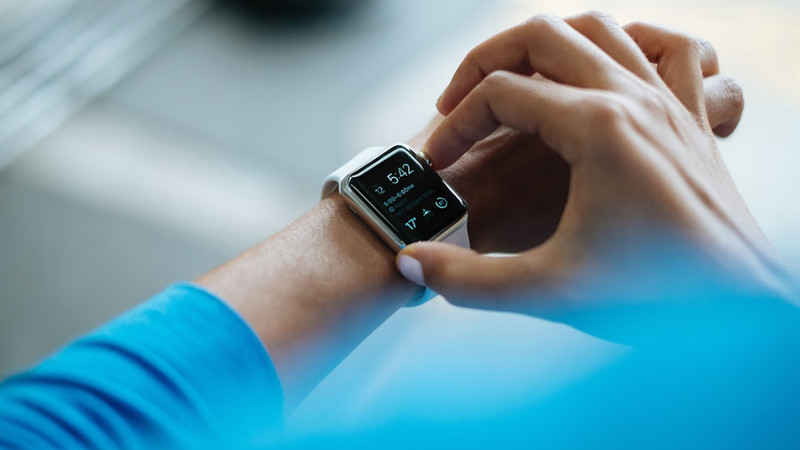
If you want a general health hub on your wrist, a mainstream smartwatch like this Apple Watch is a strong all-around choice and an Amazon best seller in its category:
Apple Watch on Amazon: https://amzn.to/4vIDSNH
Why it works for a lot of people:
- It tracks heart rate, activity, workouts, and sleep, and can alert you to certain irregular rhythms.
- It shows notifications, timers, and calls, which makes it easier to keep it on all day.
- Many doctors are already familiar with Apple Watch-style heart and rhythm reports, which can make it easier to review together.
If you like seeing everything at a glance and you do not mind a screen on your wrist, a watch like this can be a practical starting point.
A ring option if you hate wearing a watch
If you do not like the feel of a watch, a smart ring gives you most of the important health data in a much smaller package.
One of the most popular options right now is this best selling Oura ring on Amazon:
Oura Ring on Amazon: https://amzn.to/4vWHEDo
The Oura ring focuses on sleep, readiness, and recovery, with round-the-clock tracking of heart rate, variability, temperature trends, and movement.
It is particularly useful if you care about how your lifestyle, hormones, stress, and habits are really affecting your nights and your next day energy.
Because it is a ring, getting the right size is crucial.
If the fit is off, the readings can be off, too.
That is why it is smart to order the ring sizing kit first:
Oura Ring sizing kit on Amazon: https://amzn.to/48fhMIC
The sizing kit is around ten dollars and is typically refundable or credited when you buy the actual ring, and it lets you wear-test different sizes at home for a few days so you get a snug but comfortable fit.
When the data is helping you, and when it is too much
For some people, looking at their numbers is reassuring.
They see that they slept more than they thought, or that their heart rate came back to normal after a stressful week, and they feel calmer.
For others, checking stats becomes a new obsession.
If you notice yourself doom-scrolling your sleep scores, feeling panicked about every dip in heart rate variability, or changing your day based only on what your tracker says, it might be time to pull back.
Your device should give you a clearer picture of your health, not make you more anxious and disconnected from how you actually feel.
If the data is stressing you out, talk to your doctor about it and agree on what is worth watching and what you can safely ignore.
Your data matters, but your story matters more
Wearables are powerful, but they only measure what the sensors can see.
They do not know about your childhood, your relationships, your job stress, your grief, your financial pressure, or your history with food, alcohol, and sleep.
Those parts of your life still drive a huge share of your health.
The best use of a tracker is to pair its numbers with your real story, then bring both to your next appointment.
The information in this article is for educational purposes only and is not a substitute for professional medical advice, diagnosis, or treatment. Always talk with your health care provider before making changes to your medications, exercise routine, sleep habits, or overall health plan based on wearable data. Individual results will vary.
The experiences and research mentioned in this article are general in nature and do not guarantee that you will get the same results. Individual responses to devices and lifestyle changes vary, and no specific outcome is promised or guaranteed.
FTC disclosure: If you buy products through links in this article, Feel Amazing Daily, and its founders may receive a commission or other financial benefit.

