

Short Workouts All Day Long Could Be More Powerful Than You Think
You don't need an hour at the gym to make a real difference — scattered five-minute bursts of movement may add up to serious health gains.
Most of us were taught that a workout has to be long to count. Skip the full session and you might as well not bother, right? A growing body of research says otherwise. So-called "exercise snacking" — brief, informal bouts of movement scattered through the day — is showing real promise for improving cardiovascular health, blood sugar control, and muscle strength.
Here's the good news: you don't need a gym, a trainer, or a two-hour window to benefit.
What Is Exercise Snacking, Exactly?
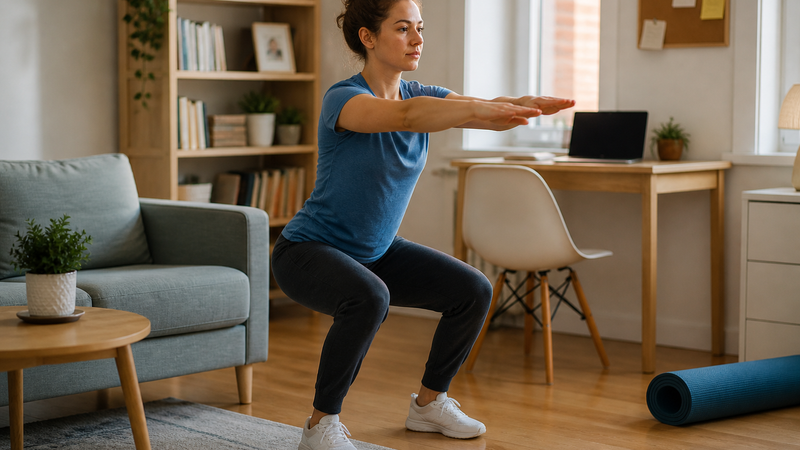
Think of it as the opposite of a structured workout. Instead of one long session, you take several short bites of activity — two to five minutes at a time — spread across the day. A quick set of stair climbs before lunch. Ten squats before you sit back down at your desk. A brisk lap around the block after dinner.
The idea is that movement doesn't have to be formal to be effective. And researchers are increasingly finding that those small deposits add up.
What the Research Actually Shows
A study published in the journal Current Biology found that brief, vigorous activity bouts — as short as one to two minutes — performed multiple times a day were linked to significantly lower risk of death from cardiovascular disease and cancer. The study tracked data from tens of thousands of adults using wearable devices, making it one of the larger observational analyses in this area. Importantly, the benefits were especially pronounced in people who otherwise described themselves as non-exercisers.
Separate research published in Applied Physiology, Nutrition, and Metabolism looked at exercise snacking and blood sugar. Researchers found that short activity bouts before meals — even simple movements like walking or bodyweight exercises — helped blunt post-meal blood sugar spikes. That's meaningful, because repeated large spikes over time are linked to a higher risk of type 2 diabetes and metabolic disease.
A review published in the British Journal of Sports Medicine found that breaking up prolonged sitting with short movement breaks was associated with improvements in blood pressure, blood sugar, and cholesterol. The evidence is still building, and most studies are observational — meaning they can show a connection but can't prove that exercise snacking alone caused the improvements. Still, the pattern across multiple studies is encouraging.
Why This Matters More After 40
As we age, prolonged sitting becomes more harmful and structured exercise becomes harder to fit in consistently. Exercise snacking offers a practical workaround. You don't need to block off time, change clothes, or drive anywhere.
There's also a muscle-loss angle worth knowing. Adults begin losing muscle mass in their 30s and 40s in a process called sarcopenia. Short bouts of resistance activity — bodyweight squats, wall push-ups, calf raises — done several times a day may help slow that process, though more research is needed to confirm the optimal approach.
How to Build Exercise Snacking Into Your Day
The beauty of this approach is that it's flexible. Here are some simple ways to get started:
- Do ten bodyweight squats every time you get up from your desk or couch
- Take a brisk two-minute walk up and down stairs before lunch and dinner
- Set a reminder every hour to stand up and do a short movement break — jumping jacks, marching in place, or a quick stretch
- Try a set of wall push-ups or calf raises while you wait for your coffee to brew
- Walk to the end of the driveway and back after each meal
You don't need to do all of these. Start with one or two and build from there.
A Few Things to Keep in Mind
Exercise snacking is not a magic fix, and it is not a substitute for medical advice. If you have a heart condition, joint problems, or another health condition that affects your ability to exercise, talk with your doctor before starting any new activity routine — even a low-key one.
It's also worth noting that current public health guidelines still recommend at least 150 minutes of moderate-intensity activity per week for adults. Exercise snacking can help you work toward that goal, but it works best as part of an overall active lifestyle — not as a reason to otherwise stay sedentary.
The Bottom Line
You don't have to choose between a perfect workout and no workout at all. The research suggests that short, frequent bouts of movement throughout the day may deliver real benefits for your heart, blood sugar, and muscles — especially if you're not a regular exerciser. Start small. Set a timer. Take the stairs. Those two-minute windows add up more than you'd expect.
