

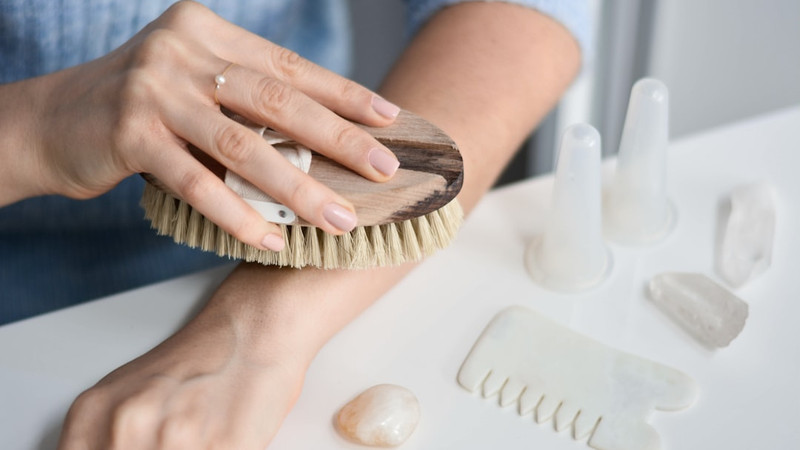
Dry brushing has become a popular self-care ritual, often promoted as a way to detox the body, boost lymphatic flow, smooth cellulite, and even strengthen immunity. The reality is more modest — and far more grounded in basic skin biology.
When you strip away the hype, dry brushing delivers one clear benefit: mechanical exfoliation. Everything else remains largely unproven.
What Dry Brushing Is — and How People Use It
Dry brushing involves sweeping a stiff-bristled brush across dry skin, usually before showering. Most people brush upward toward the heart, starting at the feet and hands, then moving across the torso in circular motions. Sessions typically last a few minutes, followed by a shower to rinse away loosened skin cells.
The practice has roots in Ayurvedic tradition, where it appears as gharshana, but modern popularity comes from beauty culture and social media.
The One Benefit Science Actually Supports
Dry brushing removes dead skin cells from the outermost layer of the skin, called the stratum corneum. This layer naturally sheds over time, but friction speeds the process.
Dermatologists agree that physical exfoliation improves skin texture, smoothness, and brightness. After brushing, skin often looks temporarily brighter and feels softer to the touch.
That effect happens because exfoliation exposes fresher cells underneath — not because deeper structures change.
Why Skin Looks Red and “Plumper” After Brushing
Dry brushing increases local blood flow. Friction causes blood vessels near the surface to widen, producing warmth, redness, and a brief “plumping” effect.
This response is real — but temporary. It lasts minutes, not days, and does not alter collagen, elastin, or fat.
Lymphatic Drainage Claims Don’t Hold Up
Despite widespread claims, no clinical studies show that dry brushing meaningfully boosts lymphatic drainage.
The lymphatic system relies on muscle contractions and specialized massage done by trained therapists. Light brushing doesn’t apply enough pressure to drive significant change.
Cellulite and “Detox” Claims Fall Short
Dry brushing does not remove toxins. The liver and kidneys handle detoxification — not the skin.
And while one very small study suggested short-term cosmetic smoothing, dermatologists attribute this to temporary skin swelling from increased blood flow. No strong evidence supports lasting cellulite reduction.
How to Dry Brush Safely — If You Choose to Do It
When done correctly, dry brushing is generally safe for healthy skin.
Best practices include:
Use a natural-bristle brush
Brush gently on dry skin before showering
Apply light to moderate pressure
Limit to 2–3 times per week
Moisturize after bathing to restore the skin barrier
Who Should Avoid Dry Brushing
Skip dry brushing if you have:
Eczema, psoriasis, dermatitis
Open wounds or infections
Very sensitive or reactive skin
Warts, cold sores, or inflamed moles
Brushing compromised skin increases irritation and infection risk.
The Bottom Line
Dry brushing earns its place as a simple, inexpensive exfoliation method that can make skin feel smoother and look brighter. Just keep expectations grounded: it refreshes the skin's surface — it doesn’t overhaul the systems beneath it.
Medical Disclaimer
This article provides general information for educational purposes only and is not a substitute for professional medical advice, diagnosis, or treatment. Always speak with a qualified healthcare provider before making changes to your health routine, including starting or stopping any supplement, medication, or wellness practice.

