

Could Exercise Actually Slow Parkinson's Disease? New Research Says Maybe
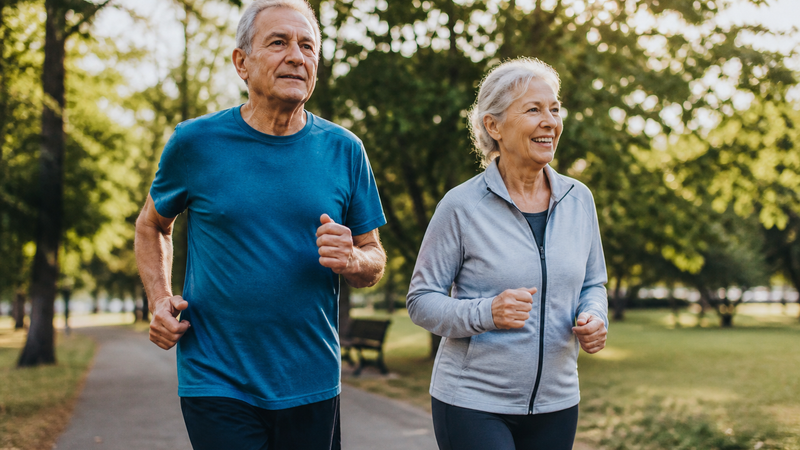
A large new study suggests that people with Parkinson's who stay more physically active may experience a slower decline in motor and cognitive function.
Most people think of exercise as something that keeps you fit and your weight in check. But a growing body of science suggests it may do something far more powerful for people living with Parkinson's disease — it may actually help slow how fast the condition progresses.
That's not a small idea. And while it's not a cure, the new findings are worth paying close attention to.
What the Research Found
A study published in the Journal of Neurology, Neurosurgery & Psychiatry followed more than 200 people with early-stage Parkinson's disease over several years. Researchers tracked participants' physical activity levels alongside standard clinical measures of how their disease was progressing.
The finding: people who reported greater physical activity showed significantly slower decline in both motor function — things like balance, coordination, and movement — and cognitive function compared to those who were less active.
The researchers also found that higher activity levels were linked to better quality of life scores over time.
Why This Matters for Parkinson's Patients
Parkinson's is a progressive neurological condition, meaning symptoms tend to worsen over time. The disease affects the brain's ability to produce dopamine, a chemical that plays a key role in smooth, controlled movement.
There is currently no treatment that definitively stops Parkinson's from progressing. That's what makes these findings meaningful — they suggest a lifestyle factor that is accessible to many patients may influence the disease's course.
It's important to be clear: this study shows an association, not proof that exercise directly causes slower progression. People who are less sick may also be able to exercise more, which could influence the results. The researchers acknowledged this limitation.
What Kinds of Activity Were Linked to Better Outcomes
The study did not prescribe one specific type of exercise. Participants' activity levels were measured broadly, capturing everything from walking and cycling to household movement and structured workouts.
Other research in this area has looked more closely at specific types of activity. Aerobic exercise, strength training, yoga, tai chi, and even dance have all been studied in Parkinson's patients, with various findings suggesting benefits for balance, mobility, and mood.
The common thread: moving more, in whatever form a person can manage, appears to be better than moving less.
What Experts Think Is Happening in the Brain
Scientists believe exercise may support brain health in Parkinson's through several pathways. Physical activity is known to promote the release of brain-derived neurotrophic factor, or BDNF — a protein that supports the survival and growth of neurons.
Exercise also increases blood flow to the brain and may help reduce inflammation, both of which are thought to play a role in neurological diseases.
Again, much of what researchers understand about these mechanisms comes from earlier studies, including some animal research. More work is needed to fully understand how exercise affects the Parkinson's brain in humans.
What This Means If You or a Loved One Has Parkinson's
The most important step is to talk with your neurologist or physician before starting or changing any exercise program. Parkinson's affects balance and coordination, which means safety is a real consideration, and the right type and intensity of activity will vary from person to person.
That said, physical activity is already recommended as part of standard Parkinson's care by major organizations including the Parkinson's Foundation. These new findings add to the evidence that exercise isn't just good for general health — it may be one of the most important tools available to people managing this disease.
- Ask your doctor what types of exercise are appropriate for your stage of the disease
- Consider working with a physical therapist who has experience with Parkinson's patients
- Look into programs designed specifically for Parkinson's, such as boxing, dance, or tai chi classes built around the condition's challenges
- Even short, consistent bouts of movement may count — don't wait until you feel ready for a full workout
The Bottom Line
A study following more than 200 people with early Parkinson's disease found that those who were more physically active experienced a slower decline in movement and cognitive function over time. The research doesn't prove that exercise stops disease progression, but it adds meaningful weight to the case for staying as active as safely possible. If you or someone you love is living with Parkinson's, talk to your doctor about building movement into your daily routine — it may be one of the most powerful things you can do.
