

Are You Losing Muscle Without Knowing It? The Silent Threat of Sarcopenia
Most people don't notice they're losing muscle until it's already affecting how they feel, move, and live — but there's a lot you can do about it.
You might be eating well, staying active, and feeling pretty good. But starting in your 30s, your body quietly begins losing muscle mass — and the process picks up speed after 60. Scientists call it sarcopenia, and it's one of the most underappreciated threats to healthy aging. The good news: it's not inevitable.
What Is Sarcopenia, Exactly?
Sarcopenia is the gradual loss of skeletal muscle mass and strength that comes with aging. The word comes from the Greek for "poverty of flesh," and that's a fitting description. Research published in the Journal of Cachexia, Sarcopenia and Muscle estimates that adults can lose anywhere from 3 to 8 percent of their muscle mass per decade after age 30 — and that rate accelerates significantly after 60.
It's not just about looking less toned. Muscle does far more than move your body. It plays a central role in metabolism, blood sugar regulation, bone support, and overall resilience. When you lose enough of it, everyday tasks — climbing stairs, carrying groceries, getting up from a chair — become harder than they used to be.
Why It's More Common Than You Think
The World Health Organization recognizes sarcopenia as a major contributor to disability, loss of independence, and poor quality of life in older adults. Yet many people — and even some doctors — chalk up the symptoms to "just getting older."
Here's the problem with that: by the time most people notice the signs, significant muscle loss has already occurred. Fatigue, weakness, slower walking speed, and difficulty recovering from illness or injury can all be early signals. A body composition scan or simple grip strength test can reveal what a scale never will — because muscle weighs more than fat, and the scale may look perfectly normal even as your muscle-to-fat ratio shifts in the wrong direction.
What Drives Muscle Loss As We Age
Several forces work against your muscles as the decades pass. Hormonal changes play a significant role — declining levels of testosterone, estrogen, and growth hormone all affect the body's ability to build and maintain muscle tissue. The National Institute on Aging notes that older adults also experience changes in how their muscles respond to protein, meaning they may need more dietary protein to get the same muscle-building signal that younger adults get from smaller amounts.
Physical inactivity is the other major driver. Muscle is metabolically expensive — the body won't maintain what it doesn't use. Even a few weeks of significantly reduced activity, such as recovering from an illness or injury, can cause measurable muscle loss in older adults.
The Research on Reversing It
Here's the empowering part: evidence consistently shows that sarcopenia can be slowed, and in many cases meaningfully reversed, even in people in their 70s and 80s. The two most well-supported strategies are resistance training and adequate protein intake.
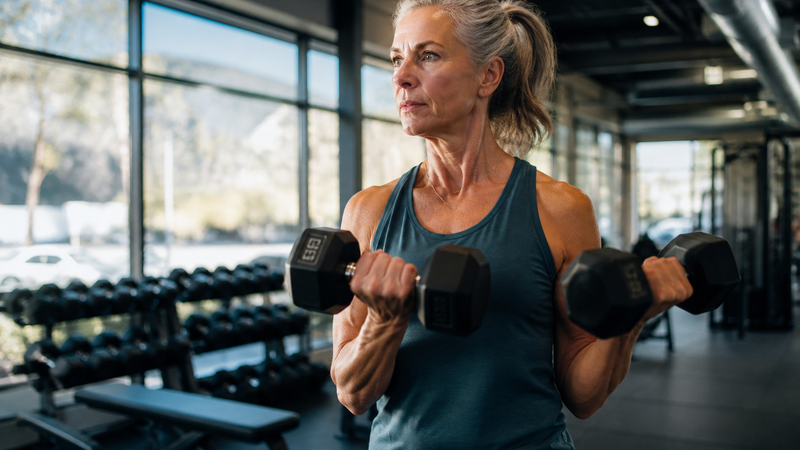
Multiple studies, including research reviewed by the American College of Sports Medicine, show that progressive resistance exercise — think weight lifting, resistance bands, or bodyweight exercises like squats and push-ups — is the most powerful stimulus for rebuilding muscle at any age. "Progressive" is the key word: the muscles need to be gradually challenged with more resistance over time to keep responding.
On the nutrition side, research suggests that older adults benefit from consuming protein more evenly across meals rather than eating most of it at dinner. Studies have pointed to a target of roughly 25 to 30 grams of high-quality protein per meal as a useful benchmark for stimulating muscle protein synthesis in older adults, though individual needs vary. Talk to your doctor or a registered dietitian before making major changes to your diet.
Practical Steps Worth Starting Today
- Add resistance training at least twice a week. You don't need a gym. Resistance bands, dumbbells, or even bodyweight exercises can get the job done. If you're new to strength training, working with a certified trainer for a few sessions can help you start safely.
- Spread your protein throughout the day. Instead of a light breakfast and a heavy dinner, aim to include a quality protein source — eggs, Greek yogurt, fish, chicken, legumes, or tofu — at every meal.
- Don't underestimate walking. Aerobic activity alone won't build muscle the way resistance training does, but staying active throughout the day supports overall function and slows age-related decline.
- Ask your doctor about a body composition assessment. A standard scale won't catch muscle loss. If you're over 50 and haven't discussed muscle health with your doctor, it's worth bringing up at your next visit.
- Pay attention to protein quality. Foods rich in leucine — an amino acid found in eggs, dairy, meat, and legumes — appear to be particularly effective at triggering muscle protein synthesis, according to research in nutrition science.
A Note on What Won't Help
The supplement industry has been quick to market products promising to fight sarcopenia, from specialized protein powders to hormone boosters. Some ingredients, like creatine, have a reasonable evidence base for supporting muscle in older adults when combined with resistance training — but no supplement replaces the fundamentals. If you're considering any new supplement, especially one that claims to affect hormones, have a conversation with your doctor first.
The Bottom Line
Sarcopenia is real, it's common, and it quietly chips away at strength, independence, and quality of life — often before people realize what's happening. But it is not an unavoidable part of aging. Resistance training and adequate protein intake are the two most evidence-backed tools you have, and the research shows they work even later in life. Start where you are, talk to your doctor, and give your muscles the challenge and fuel they need to keep you strong for the long haul.
