

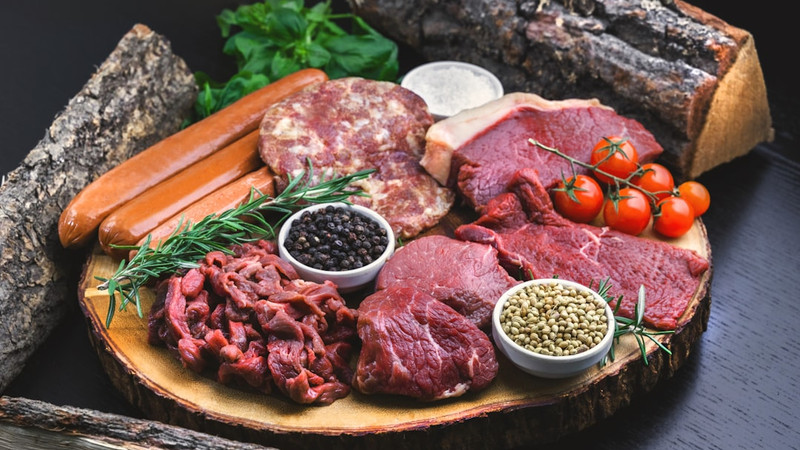
People with a genetic risk for Alzheimer's disease did not have an expected increase in cognitive decline or dementia if they consumed relatively large amounts of meat, a Swedish cohort study showed.
Higher total meat consumption -- comparing the top and bottom quintiles -- was tied to better-than-expected cognitive trajectories (β=0.32, P=0.01) and reduced dementia risk (subdistribution HR 0.45, P=0.04) in people who were either APOE4 homozygotes (APOE4/4) or had one APOE3 and one APOE4 allele (APOE3/4), said Jakob Norgren, PhD, of the Karolinska Institute in Huddinge, and colleagues.
This association was not seen in people who had less genetic Alzheimer's risk, the researchers reported in JAMA Network Open.
"These findings suggest that higher meat consumption than conventionally recommended may be associated with benefits in a genetically defined subgroup comprising approximately one-quarter of the global population," Norgren and co-authors wrote.
Read Full Article Here

